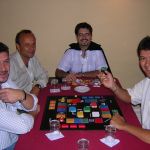
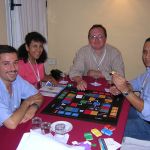
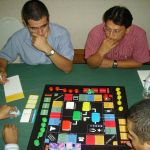
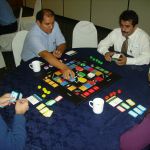
Our encounter with our first client was probably the very best thing that happened to us. Out of a casual lunch conversation with Merck’s Peruvian Chemicals Division Manager, the possibility of researching and designing a Game for Salesforce Training arose.
The vision of our client was to develop a training program so entertaining to his sales team, that it would be impossible for them not to apply the skills and knowledge derived from it. The Chemicals Division was having a hard time in the market due to the rising price of their Euro-bought-German-products which couldn’t compete with the American-dollar-priced products. Worldwide, Merck demanded a Customer Intimacy Strategy to be executed by their companies around the world in order to sustain their business based on high quality and strong client relationships.
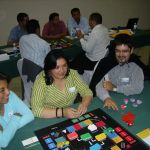
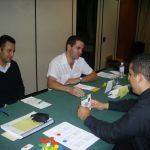
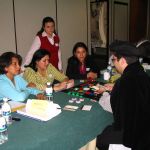
The Merchants of Venice Training Program was designed to teach the sales representatives (mostly from a Chemistry academic background or similar) to use their emotions, communication and ethics skills in order to increase sales and profit by creating value for the client’s business, instead of focusing on the technical and financial arguments.
The program was launched as a pilot with 30% of the salesforce. After a year, participants had increased their revenue by 30%, while the rest of the salesforce had only increased their revenue by 3%. The program was then launched to the rest of the salesforce, the sales support team, all business leaders and was even extended to the Peruvian Pharmaceutical Division. The program was later taken to Argentina, Brazil, Chile, and Ecuador, receiving an honorary mention in Merck’s yearly Global Innovation Award.
The methodology of the program consisted of three main elements:
Sales Role-playing in the context of 15th Century Venice, allowing participants to rely more on their personal skills than technical knowledge.
Simple 16-behavior model based on Robert Cialdini’s persuasion theory, with a scoring of points so participants could easily identify persuasive behaviors.
Client and business opportunity analysis in order to connect the behavioral strategy to the client’s specific traits and requirements.
The same program, methodology and skill set was taken to other clients from different sectors, giving GCh a commercial training origin that has been a great asset for the company through the years.